We’re always working on our kitchen counter organization, but when you cook all the time, there are plenty of things you want to keep nearby. Appliances, utensils, cutting boards, and other things you use regularly can take up a lot of room!
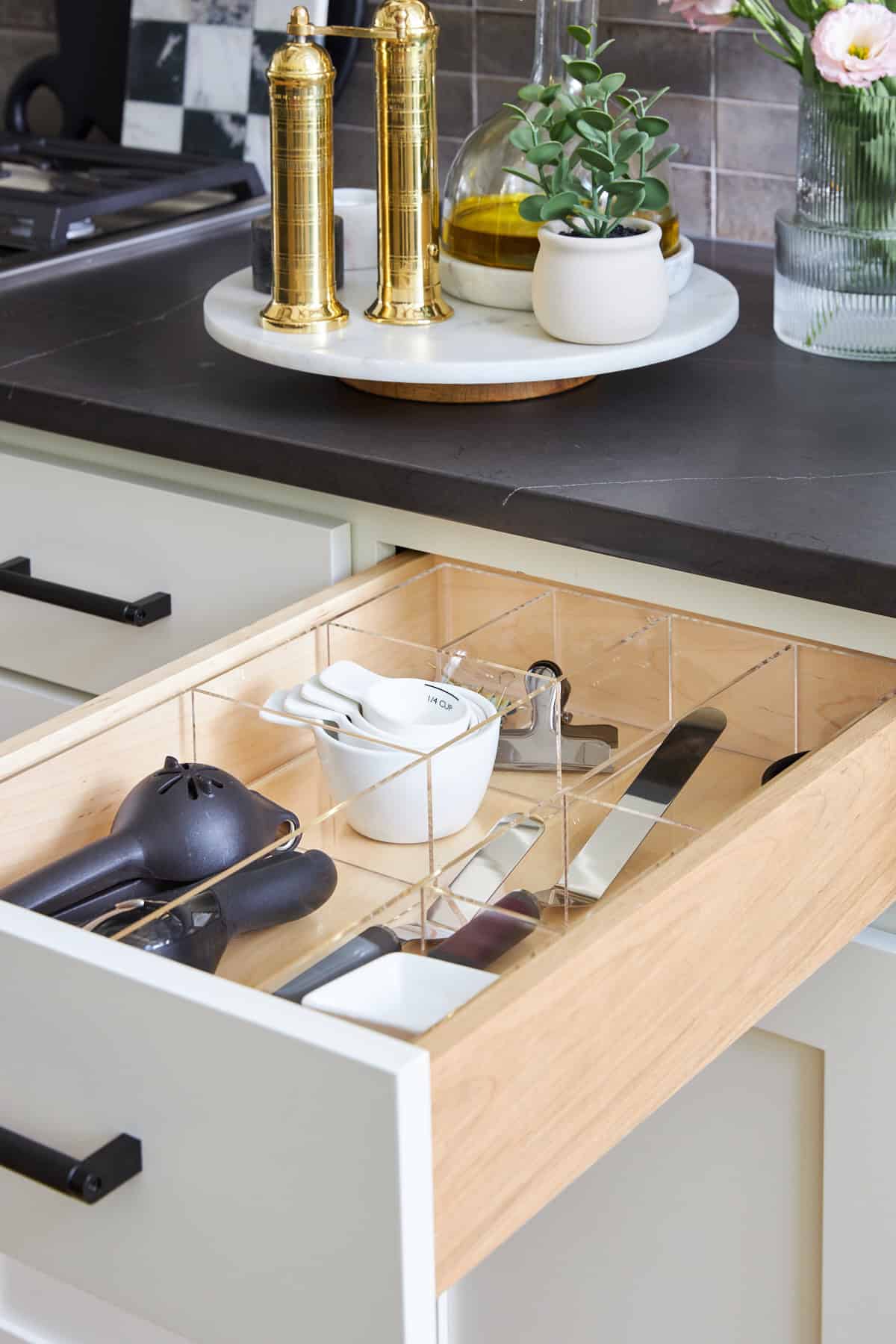
Table of Contents
That’s why organizing your kitchen counters is really about deciding what you use enough to warrant keeping out and what can be stored somewhere else. You don’t have to put everything away! But you also don’t want so much sitting out that you don’t have room to actually cook.
Kitchen counter organization doesn’t have to take a ton of time or cost a lot either. A quick 15-30 minute decision-making and cleanup time is all you need, no matter the size of your kitchen. And you can invest in storage if you really need it. But most likely a quick reorganization of your cabinets or drawers will do the trick!
Does It Earn Its Spot?
When it comes to kitchen counter organization, the first thing we think about is how often we actually use something. If you use it every day or almost every day, it probably makes sense to leave it on the counter. If you only pull it out every once in a while, you may not need to give it permanent counter space.
Of course, this is going to be a little different for everyone. For instance, if you make toast every morning, your toaster is probably staying put. The same is true if storing it will be inconvenient for anyone else in the house. However, if it’s only getting used once or twice a month, you may decide that the extra counter space is more useful.
If you do a lot of cooking like we do, you may find that there are certain things you need nearby all the time. For example, a large cutting board or mixing bowl might take up more room than a smaller item. But if you’re constantly reaching for it, it may deserve to take up a little space. In that case, keep it on the counter rather than stashing it away and pulling it out every day!
What Usually Deserves Counter Space
There aren’t really any rules about what has to stay on a kitchen counter. It really comes down to what makes sense for you. These are a few things you might consider.
Coffee and Tea Supplies – If coffee or tea is part of your everyday routine, you probably don’t want to pull your coffee maker or kettle out of a cabinet every morning. But other necessities can be tucked away nearby. We like using coffee and tea drawer storage (made by Salt by Sabrina) for things like tea bags, coffee pods, and other supplies that don’t need to sit out.
Appliances You Use Every Day – Your toaster, blender, air fryer, or any other appliance can stay out if you really use it all the time. Just because a Pinterest post shows someone else’s blender stored in a cabinet doesn’t mean you have to if you’re making something like fruity smoothies in it every morning.
Knives – If you use a knife block and reach for your knives all the time, keeping it on the counter makes sense. If you only use a couple of knives, though, you can also decide whether the whole block needs to be there. Another storage option may actually work better. In fact, if you have wall space, installing a magnetic strip to hold your knives can be a great alternative. Just don’t put your knives in drawers where they’re bound to become dull.
Utensils – We love having a crock near the stove for wooden spoons, spatulas, and the other utensils we’re always grabbing. Instead of opening a drawer every time you need something, you can keep the ones you use the most right where you cook. It keeps everything tidy and frees up space in our kitchen drawers.
Oil and Salt – Oil and salt definitely stay within reach for us because we use them in almost everything! A salt shaker or oil vessel isn’t just sitting there to look pretty if you’re actually using it every day. These are the types of things that can earn their spot. After all, putting them away would just mean pulling them right back out again.
The bottom line is: If you use something all the time and have the space for it, there’s probably no reason to hide it away. Your kitchen counter organization strategy should make life easier, not cause you to retrieve things from cabinets every day!
What Can Probably Go Somewhere Else
Now, take a look at the things you don’t use very often. These are usually the easiest items to move and can sometimes free up a surprising amount of space.
Occasional Appliances – Stand mixers, waffle makers, slow cookers, and other appliances can take up a lot of room. Depending on how often you put them to work, some may need to stay out. Others can go in a cabinet. For instance, if you only whip up waffles every few months, you probably don’t need your waffle maker taking up space on the regular.
Decorations – There’s nothing wrong with having ornamental pieces in your kitchen. However, if you’re moving them every time you need to chop vegetables or set down a mixing bowl, you may have too many in your prep area. Sticking to wall decor, though, can help to eliminate some of the clutter. Another option is to infuse your kitchen with character using functional items. Try decorative salt and pepper shakers or appliances with colors or patterns that match your kitchen’s style.
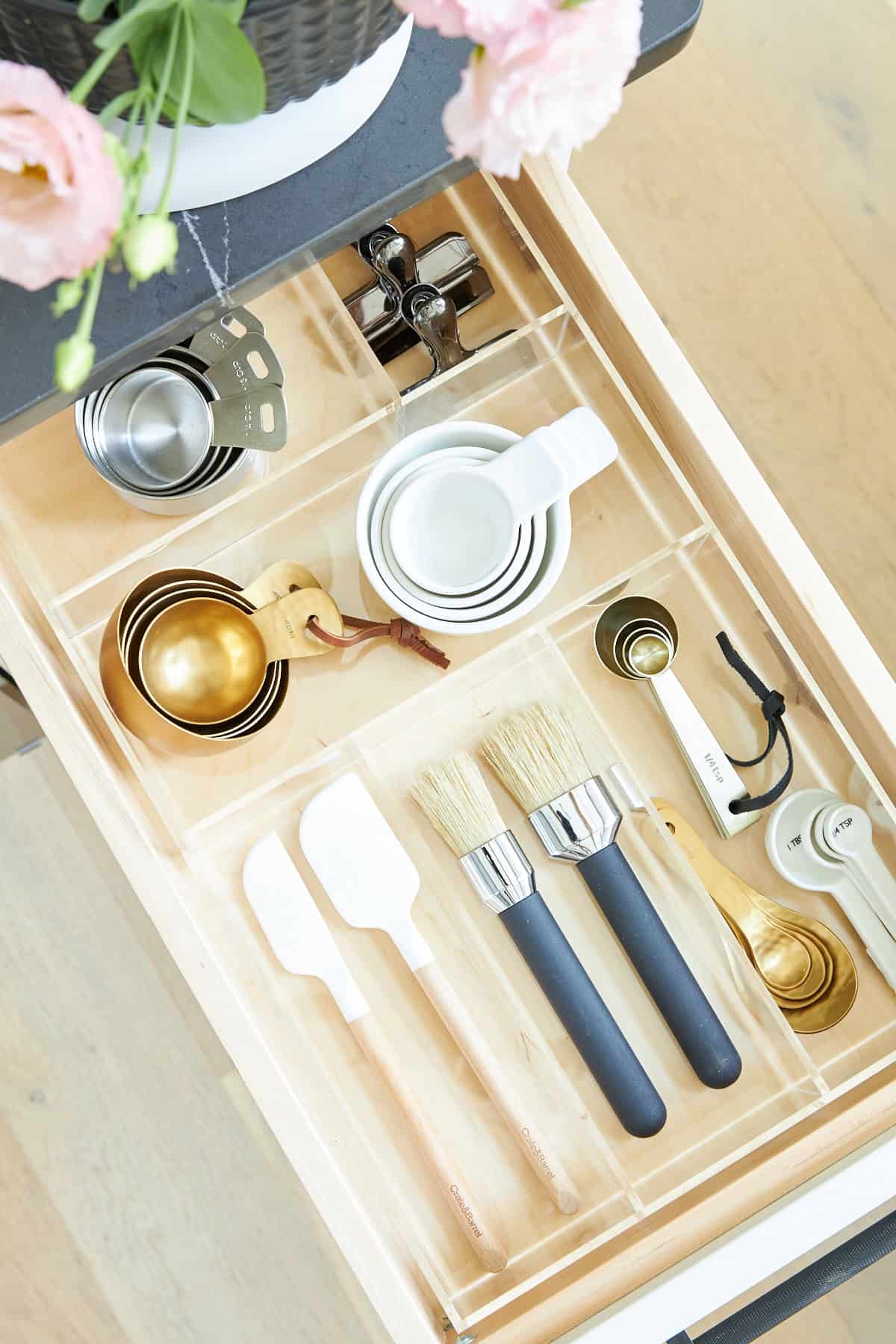
Extra Tools – If you have several versions of the same thing, you probably don’t need them all sitting out. Keep the ones you actually use nearby, and store or donate the others. And for all those smaller tools you decide to put away, kitchen drawer organizers can help you keep them together instead of just moving the clutter from your counter into a drawer.
Kitchen Counter Organization Ideas for Everything That Stays
Once you know what you’re leaving out, you can start figuring out where everything should go. We’re big fans of keeping things close to where we actually use them.
If you make coffee every morning, keep your coffee supplies together near the coffee maker. Or place them in a drawer that’s close by. If you have several utensils you use while cooking, keep them next to the stove. That makes more sense than the other side of the kitchen and maximizes space. You don’t have to create a complicated system, but grouping similar things can make your counters easier to use.
Use Trays – If you have several smaller items in one area, try putting them on a tray. Oils, salt, pepper, and other frequently used seasonings can all go together. Or you can use one for your morning tea and coffee supplies. Using a tray helps to organize similar ingredients or tools. But it also makes it easier to move everything if you need the space or want to clean underneath.
Try a Caddy or Container – Utensils and other smaller items are easier to keep together when they have a designated place. Depending on what you’re trying to organize, you may also be able to use some kitchen gadget organizers. Those will help keep everything in its place.
Keep Things Where You Use Them – We can’t emphasize this enough — it makes a huge difference! If you always use your cutting board in the same area, keep it there. Have a beloved spice blend that you sprinkle into many of your dishes? Next to the stove is the perfect home for it. It doesn’t need to be relegated to where you’ve stored your other spices.
Give Mail and Keys Their Own Spot – Sometimes, the kitchen is just where everyone naturally drops their stuff. If that’s the case in your house, you don’t have to fight it! Give keys, mail, and other everyday items their own small area. But try to keep it away from where you prepare food to cut down on cleanup time before you even start cooking.
Rotate What You Keep Out
We also like the idea of changing what stays on the counter depending on what you’re using at the time. Something doesn’t have to live on your counter all year just because there are a few months when you use it constantly.
For instance, if you bake a lot during the holidays, you may want to keep your stand mixer out. It’s heavy, and if you’re using it several times a week, there’s no reason to keep moving it around. Once you aren’t baking as often, you can just put it away again!
The same thing can work for drinks. If you make iced coffee all summer, you might have extra coffee supplies out during the warmer months. Later, you can switch things around.
When you put something away, try to store it somewhere that still makes sense. Our guide on organizing kitchen cabinets by cooking zone can help you decide where to keep appliances and tools based on how you use them.
And if you’re looking around wondering where you’re supposed to put all this stuff once it leaves the counter? We also have plenty of small kitchen storage ideas that can help you find more room.
Common Mistakes
You can organize your kitchen counters any way that works for you. However, if they still feel crowded, there are a few things that may be getting in the way.
Keeping Everything Out – You may use your waffle maker, stand mixer, blender, and food processor, but that doesn’t mean they all need to be on the counter at the same time unless you have a large amount of space. Think about what you’re actually using right now, and stick with that. Or, what may make the most sense for some kitchens is prioritizing by weight — heavy appliances get priority on the counter while smaller appliances can be returned to their home in the cabinet after you use them.
Letting Mail and Other Papers Pile Up – If one piece of mail lands on the counter, somehow ten more always seem to join it! Try to deal with it regularly or give it a separate place before the pile starts taking over. A small bin will do the trick, or even magnetic clips on the fridge!
Putting Too Much Away – Surprise! This can be a problem, too. If you use your coffee maker every morning, you don’t have to store it in a cabinet just because you like the look of an empty counter. Your kitchen still needs to be practical for the way you — and your family or roommates — use it.
Using All Your Prep Space for Cute Decor – Keep the items you really like, but make sure you still have enough room to do what you need to do in the kitchen. You don’t want to have to rearrange the counter every time you make a meal.
FAQs About Kitchen Counter Organization
Keep the things you use every day or almost every day within easy reach. Depending on how you cook, this might be your coffee maker, toaster, knife block, utensil crock, cutting board, oil, or salt. What to keep on kitchen counters is really going to depend on what you use on a regular basis.
Kitchen counter organization relies on not keeping things on your counter that you rarely use, that constantly get in your way, or that aren’t related to the task of prepping meals. Mail, paperwork, extra tools, and appliances you only use occasionally can usually go somewhere else. Of course, any food that needs to be refrigerated should be put away, too!
Start by thinking about how often you use everything. If you reach for something every day or almost every day, leave it out if you have room. If you only use it weekly or occasionally, try storing it somewhere else and pulling it out when you need it. For larger appliances, mixing bowls, and other tools, this is where pull-out drawers in cabinets can be a solid investment!
Keep the supplies you use every day in the same area as your coffee maker or kettle. You can use a tray to keep smaller items together and put mugs, tea bags, coffee pods, and other extras in a nearby drawer or cabinet.
They can if you have enough room and leaving them out makes your life easier. We tend to keep things like our blenders and stand mixers out because we’re constantly using them, while appliances we use less frequently can be put away. You can always bring an appliance back out during a week or season when you know you’ll be using it more.
Every few months is usually enough, but you can also do it whenever your counters start feeling crowded. You may find that you’re using different appliances or tools depending on the season, so it’s a good idea to change things around throughout the year!