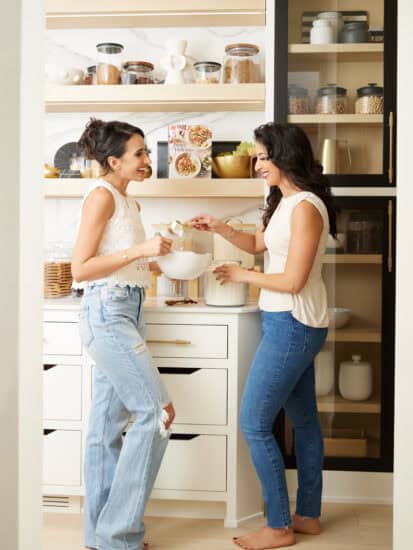
If you’ve ever wondered how to organize kitchen cabinets so you can actually find what you need while you’re cooking, we suggest you try organizing them in zones! Instead of putting all of the same types of items together, we like to think about where we use everything. This way, the things we need are close by when we need them.
We spend a lot of time in our kitchens, whether we’re testing recipes, cooking for our families, or getting ready to have people over. So, we’ve learned that a kitchen can look perfectly organized but still be frustrating to cook in!
That’s why we divide everything into three basic zones: prep, cook, and serve/store. You can use the same idea whether you have a huge kitchen or just a few cabinets to work with. And, luckily, you don’t have to completely redo your kitchen to get started!
Kitchen Cabinet Organization at a Glance
Organizing your kitchen into prep, cook, and serve/store zones helps keep the things you use close to where you actually need them. Start with the cabinets around your main cooking and prep areas, and organize everything based on how often and where you use it. Then, move less frequently used pieces to the extra spaces.
Zones Covered: 3
Best For: Any kitchen size
Redo Time: About 1-2 hours
Why Organize Kitchen Cabinets in Zones?
For us, it really comes down to making cooking easier.
We make everything from big pots of koshari and lesan el asfour to quick dinners during the week. And when there are several pots, bowls, and ingredients out at once, we definitely don’t want to be walking back and forth across the kitchen looking for things!
Instead of asking what type of item something is, think about where you stand when you use it. If you always use a cutting board next to the sink, keep your cutting boards close to that spot. Or, if you reach for olive oil every time you’re standing at the stove, that’s probably where your olive oil should be, too.
Once you start looking at your kitchen this way, it becomes much easier to figure out what should go where!
The Prep Zone
First, figure out where you do most of your food prep. For some kitchens, that might be a big island. Or, if you have a smaller kitchen, it could just be the counter next to your sink!
This is where we like to keep things like cutting boards, mixing bowls, and prep containers. Depending on your kitchen and how you cook, you might keep everyday dishes nearby, too.
The important thing is to keep the items you use while getting ingredients ready close to your main prep space. If you have to make your way to the other side of the kitchen every time you need a knife, try moving them closer. It’s such a simple switch, but it can make cooking a whole lot easier!
The Cook Zone
This is probably the zone we pay the most attention to because there’s usually a LOT happening around the stove!
Pots and pans are obvious choices for the cook zone. However, think about all the other things you reach for once you start cooking, too. We keep frequently used oils, ghee, spices, and seasonings close by so we don’t have to leave the stove every time we need them.
For instance, if you use olive oil almost every night, you don’t have to keep it with every other bottle of oil just because they match. Keep the olive oil where you use it, and store the oils you use less often somewhere else.
The same thing goes for cookware. If there’s one skillet you use all the time, give it an easy spot to reach. You don’t want to move a whole stack of pans every time you need it!
This is also the easiest way to think about how to organize kitchen cabinets and drawers together. Your drawers and cabinets don’t need separate systems. If you use utensils at the stove, keep them in a nearby drawer. Then, use the cabinets around the stove for bigger items like pots and pans.
If you have a small kitchen and aren’t sure where to start, we recommend working on this zone first. It’s the area you’ll probably notice the most when you cook!
The Serve and Store Zone
Now, what about everything you need for serving food or having people over?
We love entertaining, so we definitely have plenty of platters, serving bowls, extra dishes, and mugs. But we don’t need all of them taking up the easiest-to-reach cabinets in the kitchen!
Instead, we use higher shelves, corner cabinets, and cabinets that are a little farther away for a lot of these pieces. This keeps them organized and easy to find when we need them without taking space away from everyday cooking items.
Of course, if you use a serving bowl all the time, keep it somewhere convenient. Just because something is technically serveware doesn’t mean you have to hide it away. Again, it’s all about how you actually use it!
What to Do With Tricky Cabinet Spaces
Some cabinets are just easier to organize than others. Then, there are those weird corners and super-deep shelves where you put something away and somehow never see it again!
Here are a few ways we like to use those spaces.
Corner Cabinets – Since corner cabinets can be harder to reach, try using them for things you don’t need every day. Extra dishes, platters, and serving pieces can all work well here.
Deep Cabinets – If you have large pots, Dutch ovens, or other bulky cookware, deep cabinets can be a great place to keep them. However, make sure you can actually get them out. If you have to remove half of the cabinet to reach a pot in the back, try a different setup.
Lazy Susans – We love a lazy Susan for bottles and jars that can get lost in a cabinet. They work especially well for oils, sauces, and spice blends because you can spin everything around and see what you have. Just be careful not to put too much on them or you’ll be right back to digging around for what you need!
Our Favorite Kitchen Storage Ideas
There are so many different organizers you can use in your kitchen cabinets, but you definitely don’t need to use them all! We recommend figuring out what you want to keep in each cabinet first. Then, you can decide which organizers will actually work in the space and help keep everything where you want it.
Shelf Risers – If you have a lot of plates or bowls, shelf risers are an easy way to give yourself some extra space. Instead of stacking everything on top of each other, you can separate your dishes and use more of the space between your cabinet shelves.
Drawer Organizers – We use drawer organizers for all kinds of utensils and smaller kitchen tools! They help keep everything separated, and you can easily see what you have instead of digging through a drawer every time you need something. These are the drawer organizers we use in our kitchens.
Bins and Baskets – Bins are great for all those smaller items that never seem to stay in one place. Depending on what you keep in your cabinets, you can use them for packets, spices, smaller pantry items, or anything else you want to keep together. If spices are what you really need to tackle, take a look at how we organize our spices, too!
Pull-Out Organizers – If you have really deep cabinets, try adding pull-out organizers. This way, instead of reaching all the way into the back of the cabinet or having to move everything in front, you can just pull the organizer out and see what you have.
And don’t forget about all those appliances and kitchen gadgets! They can take up a ton of room, especially when you start adding in all the attachments and accessories. We have even more ideas for those in our guide to kitchen gadget organizers.
Things to Avoid When Organizing Kitchen Cabinets
There isn’t one perfect way to organize every kitchen. However, there are a few things that can make your cabinets harder to use no matter how much space you have!
Keeping Things You Don’t Use – Before you organize everything, go through your cabinets and see what you actually use. If there’s a gadget or tool you haven’t touched in years, you may not need to find a new spot for it at all.
Putting Everything Together By Type – It might seem to make sense to put all of your spices together, but think about how often you actually use each one. If you use a few almost every day, keep them close to the stove. The others you only use occasionally can go somewhere else.
Making Things Hard to Reach – Try to keep the things you use most in the easiest spots to reach. You don’t want to have to move a bunch of pans every time you want to get to your favorite one.
Copying Someone Else’s Kitchen – What works in one kitchen might not work in another. For instance, if you bake all the time, it probably makes sense to keep your baking supplies somewhere convenient. If you rarely bake, you can use that space for something you reach for more often.
Forgetting About Food Storage Containers – Food storage containers can get messy fast, especially when you have lots of different sizes and lids. Keeping them together and getting rid of containers that no longer have matching lids can help. We also have even more ideas for keeping food storage containers organized.
FAQs
Start by thinking about where you use everything. If you use something while prepping food, keep it close to your prep space. Pots, pans, oils, and frequently used seasonings should be close to the stove, while serving pieces and things you use less often can go farther away.
When figuring out how to organize kitchen cabinets and drawers, think of them as one system instead of two different spaces. We like using drawers for utensils, smaller tools, and flatter items, and cabinets for larger cookware and serving pieces. Most importantly, keep everything close to where you use it!
If you don’t have a lot of cabinets, start with the things you use most often. Give your everyday cookware and cooking essentials the easiest spaces to reach, especially around the stove. Then, move serving pieces, extra dishes, and anything you only use occasionally to higher shelves or less convenient cabinets.
Start with your cook zone! Look at the cabinets and drawers around your stove, and pull out anything you don’t use while cooking. Then, move the pots, pans, utensils, oils, and other items you use regularly into those spaces.
No! We recommend organizing everything you already have before buying bins, baskets, or other organizers. Once you know where everything belongs, you can see which organizers would actually make your cabinets easier to use.
You don’t need to completely reorganize your cabinets every few months. Instead, take a quick look at them every so often and get rid of anything you no longer use. If you keep putting something back in a different spot than where you originally organized it, that might be a sign that the new spot works better!