

Learn How to Clean a Dishwasher with the best tips, tricks, products, and tools! We’re sharing step-by-step instructions and everything you need to know to make the process a breeze.

Table of Contents
- How To Clean A Dishwasher
- How To Deep Clean A Dishwasher: An In-Depth Guide
- Step 1: Gather Your Cleaning Materials
- Premade Solutions
- Tablets
- Detergents
- Pods
- Natural Alternatives
- The Best Tools for Cleaning a Dishwasher
- Step 2: Remove Interior Items
- Step 3: Spot-Clean And Clear Any Debris
- Step 4: Do A Hot Water Cycle Run
- Step 5: Clean The Dishwasher Interiors
- Step 6: Do A Second Short Cycle Wash
- Step 7: Clean The Exterior Of The Dishwasher
- How To Maintain Your Dishwasher
- Troubleshooting Common Dishwasher Problems
- Common Questions about Cleaning a Dishwasher
- The Bottom Line
- More Lifestyle Tips
How To Clean A Dishwasher
It may have never occurred to many of us that cleaning your dishwasher is a thing. Surely, it would clean itself… right? Well, no.
Think of all those bits of food from dishes that sweep around inside the dishwasher. They have to go somewhere!
Eventually, those food scraps build up in the drains and on the spray arms of the machine. As a result, those old bits of food you forgot about lead to reduced water flow. This can leave your dishes with a film of soap and grime from tiny food particles! Gross.
Just like your washing machine (yes, washing machines need cleaning, too!), regular cleaning of your dishwasher is essential. This ensures proper functioning so you can still get your dishes sparkling.
Not only will the machine work better, but you’ll also save money in the long run as well. Plus, you’ll no longer need to worry about costly repairs and maintenance! It’s a win-win.
To make the process a breeze, we’ve provided the ultimate guide for how to clean a dishwasher. After reading, you can start straight away!

How To Deep Clean A Dishwasher: An In-Depth Guide
We’ll walk you through everything you need to know for how to clean a dishwasher, from the best products and tools to methods, and more! Keep reading to find it all.
Step 1: Gather Your Cleaning Materials
Before you begin, make sure you have everything you need. You can either use pre-made cleaners or make your own DIY blends with natural products. Both methods are effective!
Premade Solutions
Countless companies have developed products specifically for deep-cleaning dishwashers. This demonstrates the importance of doing it regularly. Below are a few of our favorite options, but keep in mind that you’ll only need to use one!
Tablets
You can find specially designed tablets available to clean the dishwasher.
Keep in mind that these are different from the dishwasher cleaner tablets you use in your dishwasher during normal wash cycles. You wouldn’t want to use these with dishes in the machine!
Dishwasher cleaning tablets contain stronger ingredients than tablets used for regular wash cycles. These chemicals fight limescale and other minerals and help dissolve bits of organic material such as food.
Detergents
Liquid detergents are another option for deep cleaning the dishwasher. These are effective for dissolving grease and limescale, even the difficult stuff that seeps into the piping.
They’re also easy to use and designed for placing the whole bottle upside down in the machine. After that, it’s just a matter of running a hot cycle!
Pods
Pods are a bit of a middle step between tablets and detergents. They’re small single units like a tablet, but they contain liquid inside like a detergent.
They’re as simple to use as tablets and similar in effectiveness.
Natural Alternatives
Harsh chemicals not your thing? Worried about having them come into contact with the food your family eats? No worries!
Natural products can be just as effective for cleaning a dishwasher as using store-bought solutions. That said, making your own blend of products requires a bit of extra time and effort. However, it’s still simple to do, it’s more cost-effective, and it’s worth the effort if using natural items is important to you! The most effective natural cleaning supplies include:
- Distilled White Vinegar (Apple cider vinegar will also do the trick if you happen to have that on hand instead.)
- Baking Soda
The Best Tools for Cleaning a Dishwasher
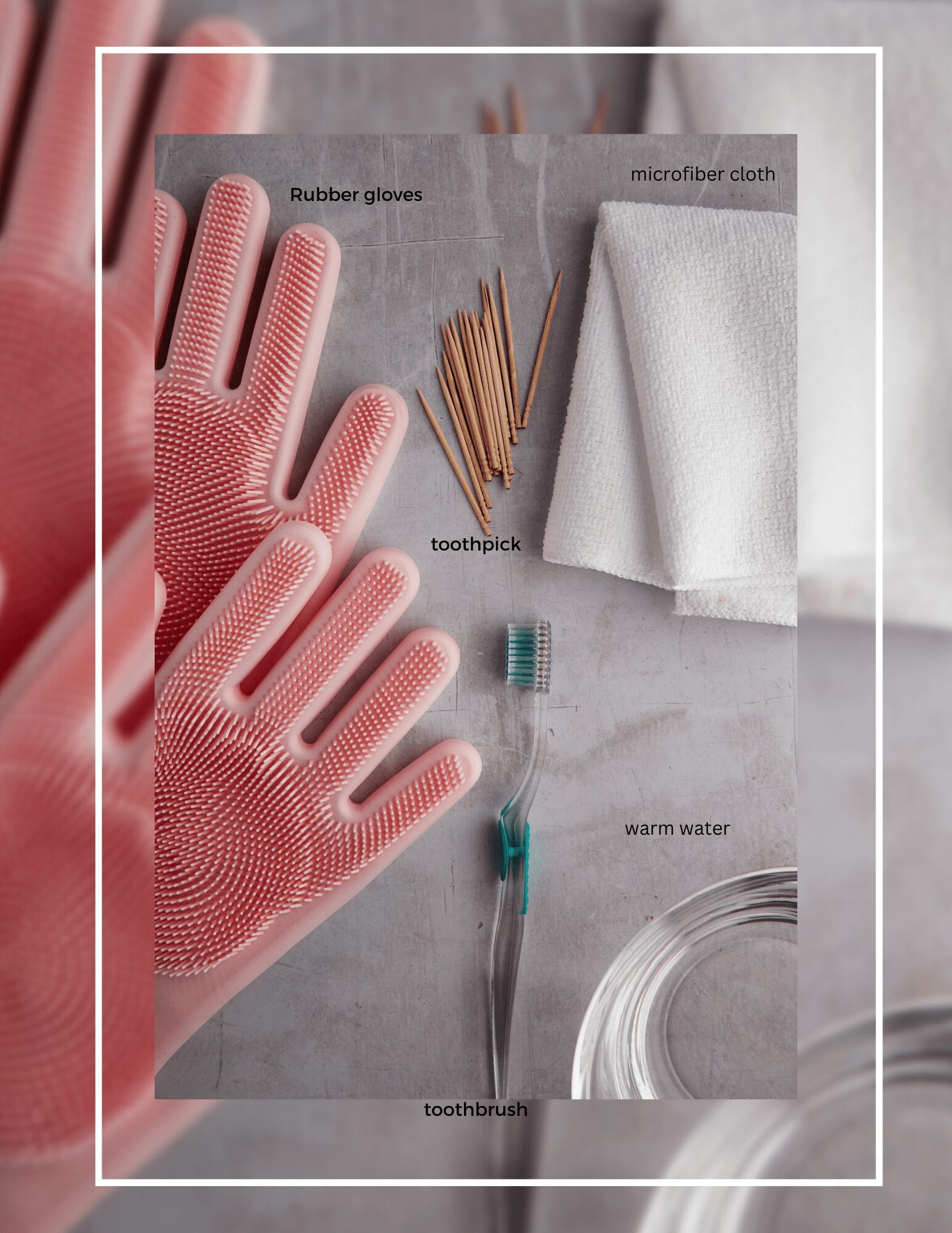
Now that you’ve picked the best cleaning products, you’ll need to gather the proper tools. For the best results, we recommend the following items:
- Warm Water
- Toothpick
- Old Toothbrush
- Microfiber Cloth
- Rubber Gloves
Step 2: Remove Interior Items
Now, you’re ready to start cleaning! To begin, open the dishwasher door and pull out any removable parts of the dishwasher. This includes the racks, silverware holders, bottom rack, and even the dishwasher filter. Remove anything that is detachable to ensure proper cleaning!
Step 3: Spot-Clean And Clear Any Debris
Following that, you should wipe any obvious bits of food off the empty dishwasher. Then, look for any signs of stains such as limescale or hard water along the sides and at the bottom of the dishwasher.
Use your toothpick or toothbrush to clear any bits hiding in small spaces. Pay special attention to where the filter and the racks slot into place. Things tend to become trapped in these areas!
How To Remove Interior Stains
If you do find stains, follow the tips below to get rid of them with ease.
Limescale Buildup and Hardwater Stains
We love to clean a dishwasher with vinegar for difficult stains like hard water or even soap scum.
Use white vinegar and baking soda in equal parts to make a paste. (So, if you use one cup of white vinegar, you’ll need one cup of baking soda.) Rub the paste into the stain, and leave it to soak for an hour. After an hour has passed, wipe the paste off with a sponge.
Then, reapply the mixture, and scrub if any residue remains! You don’t have to worry about rinsing the solution, as it will wash away in the cleaning cycles that follow.
Step 4: Do A Hot Water Cycle Run
Run the dishwasher on its hottest setting. This will rinse off any baking soda paste. It also allows the machine to wash the interior thoroughly without the racks and holders blocking certain areas.
Step 5: Clean The Dishwasher Interiors
The interiors will have a lot of areas for food bits, limescale, and mold to hide.
Make a cleaning solution by mixing equal parts white vinegar and warm water in a dishwasher-safe bowl. Make sure to have more vinegar and baking soda paste handy.
Next, look for any obvious stains. Rub the baking soda paste into any you find, and leave it to soak for an hour. Then, clean all the components with the vinegar solution.
Use the toothpick and toothbrush to get into those tight crevices. Pay special attention to the filter, silverware holder, and any areas that move (like the wheels). It’s common to find leftover food in these areas. So, you’ll want to scrub away any remaining food or stains.
Step 6: Do A Second Short Cycle Wash
Once you’re satisfied that the interiors are clean, reassemble the dishwasher.
Then, run one more cycle to rinse everything and clean out any hidden food particles that may have loosened up from scrubbing. A quick cycle wash will do for this step, as you don’t need to deep clean anything.
Step 7: Clean The Exterior Of The Dishwasher
Finish up by wiping down the front of your stainless steel dishwasher. You’ll want its exterior to match the interior and look shiny and new!
Use a toothpick and toothbrush to clear out around knobs, buttons, and crevices. Then, wipe down the control panel and door with your white vinegar and warm water solution. Or, if preferred, feel free to use your favorite multi-surface cleaning spray! Pay special attention to the handle, knobs, and buttons that you and your family touch most often.
If you’re feeling ambitious, you can also use this opportunity to move the dishwasher. Clean under, on top, and around the sides of the unit. And don’t forget the gasket (otherwise known as the seal)!
How To Maintain Your Dishwasher
Now that you’ve learned how to clean a dishwasher, you might be wondering how to keep it that way. Other than regular cleanings, another tip for maintaining your dishwasher is to make sure you use it at least weekly.
Otherwise, you can expect motor issues– or even a complete breakdown of the unit if it sits unused for too long!
People who live alone sometimes feel it isn’t worth using the dishwasher unless they have people over, as it seems wasteful. Instead, they prefer to hand-wash as they go.
However, remember that dishwashers typically use less water than hand washing, even with small loads. Plus, they save tons of time! So, let those dishes build up throughout the day, and run your machine at least once or twice a week to save yourself trouble in the long run.
How Often to Clean a Dishwasher
The best practice is to clean your dishwasher monthly.
Of course, how often to clean a dishwasher depends on how often you use it, and how much pre-rinsing (ridding utensils, plates, bowls, and cups of debris) you do will impact how often you need to clean it. Use your best judgment, but on average, monthly is a safe bet.
In the meantime, though, you’ll want to give it a quick wipe down regularly, at least on a weekly basis. And if you have any odors or residues before the month is up, it’s time for another deep clean.
Troubleshooting Common Dishwasher Problems
Even a well-loved dishwasher needs a little extra attention sometimes. If something feels off, here’s how to get things back on track quickly and easily.
Persistent Odor
If your dishwasher still smells after a cleaning cycle, there’s likely hidden buildup somewhere. Check the filter, door seals, and edges where food and grease can collect. Give those areas a quick wipe-down, then run a hot cycle with vinegar. For extra freshness, follow with a sprinkle of baking soda and a short cycle. Keeping up with regular cleaning helps prevent that smell from coming back.
Cloudy Glassware
Cloudy glasses are usually the result of hard water or detergent residue. Try using a rinse aid to help water wash off more cleanly, and make sure you’re not using too much detergent. Running a cleaning cycle with vinegar can also help break down mineral buildup inside the dishwasher so your glasses come out clear again.
Standing Water
A little water is normal, but if you’re seeing pooling at the bottom, it’s time to take a closer look. Start by checking the filter and drain area for trapped food or debris. Clear anything you find, then run a cycle to see if it improves. If water still isn’t draining properly, the drain hose may be blocked or kinked and might need a quick adjustment.
Clogged Spray Arms
If dishes aren’t coming out as clean as they should, the spray arms could be blocked. Remove them (if your model allows), rinse under warm water, and use a toothpick or small brush to clear out any clogged holes. This helps water flow freely again, so every dish gets properly cleaned.
Common Questions about Cleaning a Dishwasher
Bleach can be used in some cases, but only if your dishwasher interior is plastic and not stainless steel. It’s helpful for tackling mold or mildew, but it should never be mixed with other cleaners like vinegar. If you’re unsure, it’s best to stick with gentler options like vinegar, which are effective and safe for regular maintenance.
Start by checking for trapped food — this is usually the main culprit. Clean the filter, wipe down the door seals, and run a hot cycle with white vinegar to cut through any lingering grime. For an extra boost, sprinkle a little baking soda on the bottom and run a short cycle. It leaves your dishwasher smelling clean and fresh without any harsh scents.
Most dishwasher filters twist out easily from the bottom of the unit. Remove it, rinse away debris under warm water, and use a soft brush (like a toothbrush) to gently scrub away buildup. If it’s greasy, a little dish soap helps break everything down. Once it’s clean, place it back securely — this simple step makes a big difference in how well your dishwasher runs.
This usually comes down to a buildup or a small maintenance issue. A clogged filter, dirty spray arms, or hard water deposits can all leave behind residue. It can also happen if the dishwasher is overloaded or if the detergent isn’t dissolving properly. Give your dishwasher a quick clean, check that water can flow freely, and you’ll likely see a big improvement right away!
The Bottom Line
Even appliances that seem to be self-cleaning, like dishwashers, need a bit of maintenance.
Learning how to clean a dishwasher and doing so at least once a month will ensure that your dishes stay hygienic, the machine keeps running properly, and will also save you from costly repairs in the future!
More Lifestyle Tips
Looking for more easy ways to keep your home in tip-top shape? Check out more of our tips and tricks below!












Pods worked well for cleaning out some of our client’s dishwashers. Thank you for the helpful tips! lawrenceville appliance repair here to help.
I found cool rubber gloves on this site https://styletyx.com/ They help me a lot in everyday life!